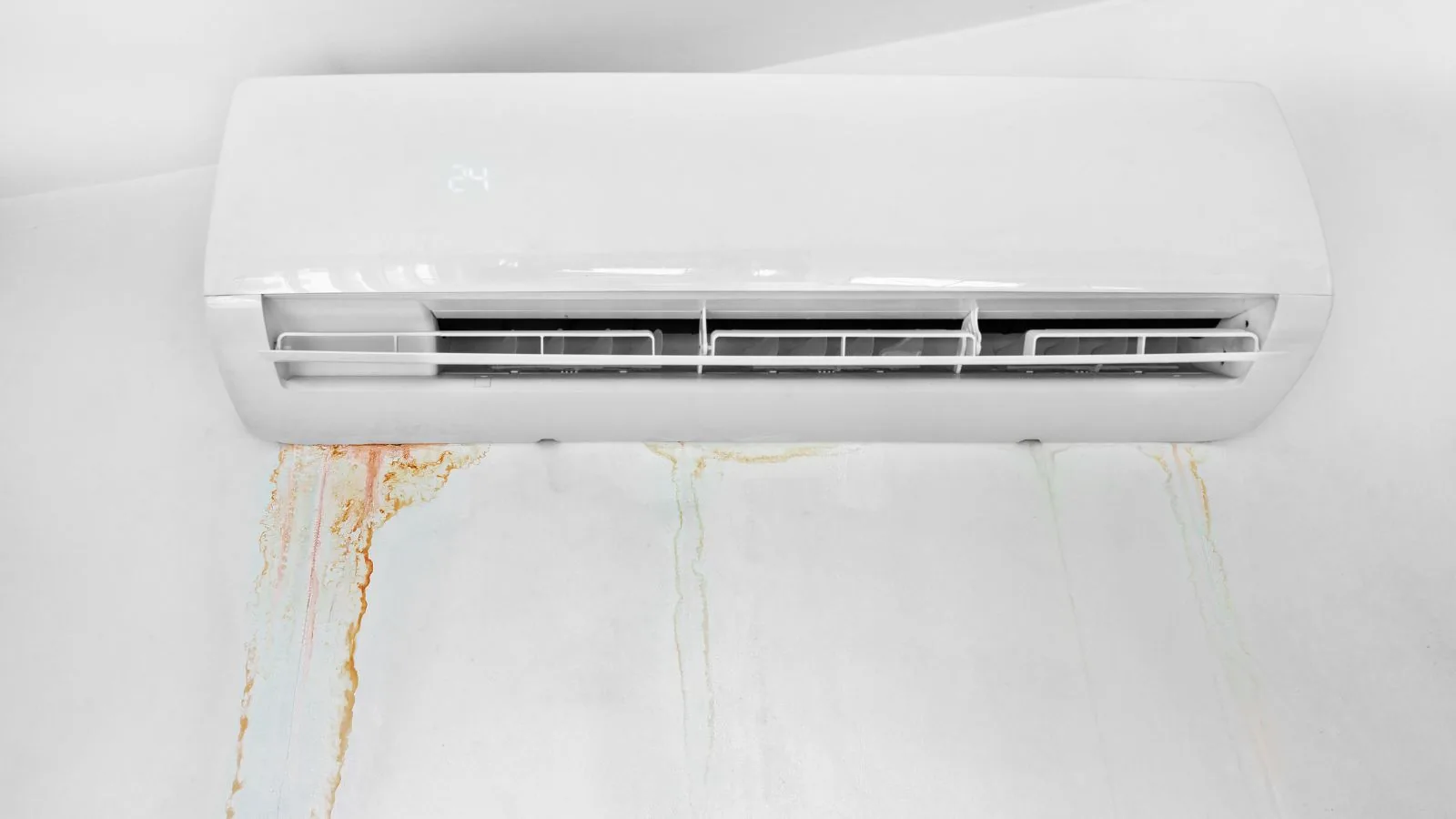
An air conditioner pulls water out of humid air, and that water has to go somewhere. When the condensate drain line clogs, the drain pan overflows or a coil freezes and thaws, the water lands in the ceiling, wall or floor. Because the equipment often sits in an attic, closet or crawl space, the damage can be well established by the time a stain appears.
This page covers condensate and equipment leaks from heating and cooling systems. A roof leak is covered under ceiling water damage repair, and a pipe failure is a plumbing issue described on the burst pipe page.
Signs of an AC leak
- A stain or drip on the ceiling below an attic air handler or near an indoor unit.
- Water in the drain pan, or a pan that is rusted through.
- A musty smell when the system runs.
- Ice on the refrigerant line or the coil.
- Rust colored streaks running down a wall under a wall mounted unit.
Because this is a humidity problem, summer is the common season, though a system left running with a dirty filter can freeze in any weather.
What to do first
Turn the system off at the thermostat. Running it keeps producing water. If the leak is heavy, turn off the breaker for the air handler.
Put a bucket under drips, and photograph the unit and the stain. If the ceiling below is sagging, treat it as described on the ceiling repair page and keep people away from it. A service technician can clear the drain line and check the pan.
How the damage is repaired
Condensate water is usually clean to start, but it picks up dust and growth from the pan and drain. Crews extract water, check insulation and drywall with a moisture meter and dry the cavity with air movers and a dehumidifier.
Wet insulation in an attic is removed and replaced. A rusted drain pan or a failed float switch is a job for an HVAC technician. We handle the water damage, and your technician fixes the equipment.
Preventing the next leak
Change filters on schedule, have the drain line cleared before cooling season and install a float switch that shuts the system off when the pan fills. A float switch is inexpensive compared with a ceiling.
Another cause is a dirty coil that freezes, so a technician should look at airflow if the system ices up. Before a long absence, set the thermostat sensibly and have the drain line checked.
Keeping the drain line clear
Most air conditioner leaks come from a condensate line that clogs with algae and dust. A yearly flush of the line, and a check of the drain pan, costs little compared with a stained ceiling. Ask your HVAC technician to look at both during a seasonal tune-up.
A float switch on the drain pan can shut the system off before the pan overflows. If you already have one, test it each spring.
What affects the cost
- How long the leak ran
- Small drips over weeks soak insulation. A pan overflow dumps water quickly.
- Location of the unit
- Attic units can affect insulation and several ceilings.
- Ceiling and wall materials
- Drywall and plaster are repaired differently.
- Drying time
- Closed cavities may need equipment for days.
- HVAC repair
- Equipment repair is billed by the HVAC company, not as part of cleanup.
We explain the scope in writing before work starts. Want your real number? Call (812) 642-7696 and describe what you see.
Insurance and your policy
Many policies cover a sudden overflow but exclude gradual leaks or failures caused by lack of maintenance. A clogged drain that went unattended may be treated as maintenance.
Keep service records for the system. They show an adjuster that the equipment was maintained.
Frequently asked questions
Is AC condensate dirty water?
It starts clean but can pick up mold and slime in the pan and drain line, so treat it as Category 1 or 2 depending on how long it sat.
Can I clear the drain line myself?
Many homeowners flush it with a wet vacuum at the outdoor end or a vinegar rinse per the maker's guidance. If you are unsure, call an HVAC technician.
Will the ceiling need replacing?
Small stains can be patched after drying. A ceiling that sagged is usually cut out and replaced.
Why is my AC freezing?
Dirty filters, low airflow and low refrigerant are common causes. An HVAC technician can diagnose it.
AC leak repair in Jeffersonville
Humid summers on the Ohio River keep air conditioners working hard, and condensate problems are common wherever systems run for months. We serve Jeffersonville and nearby towns including Clarksville. If the leak ran long enough to leave dark spots, see mold remediation.