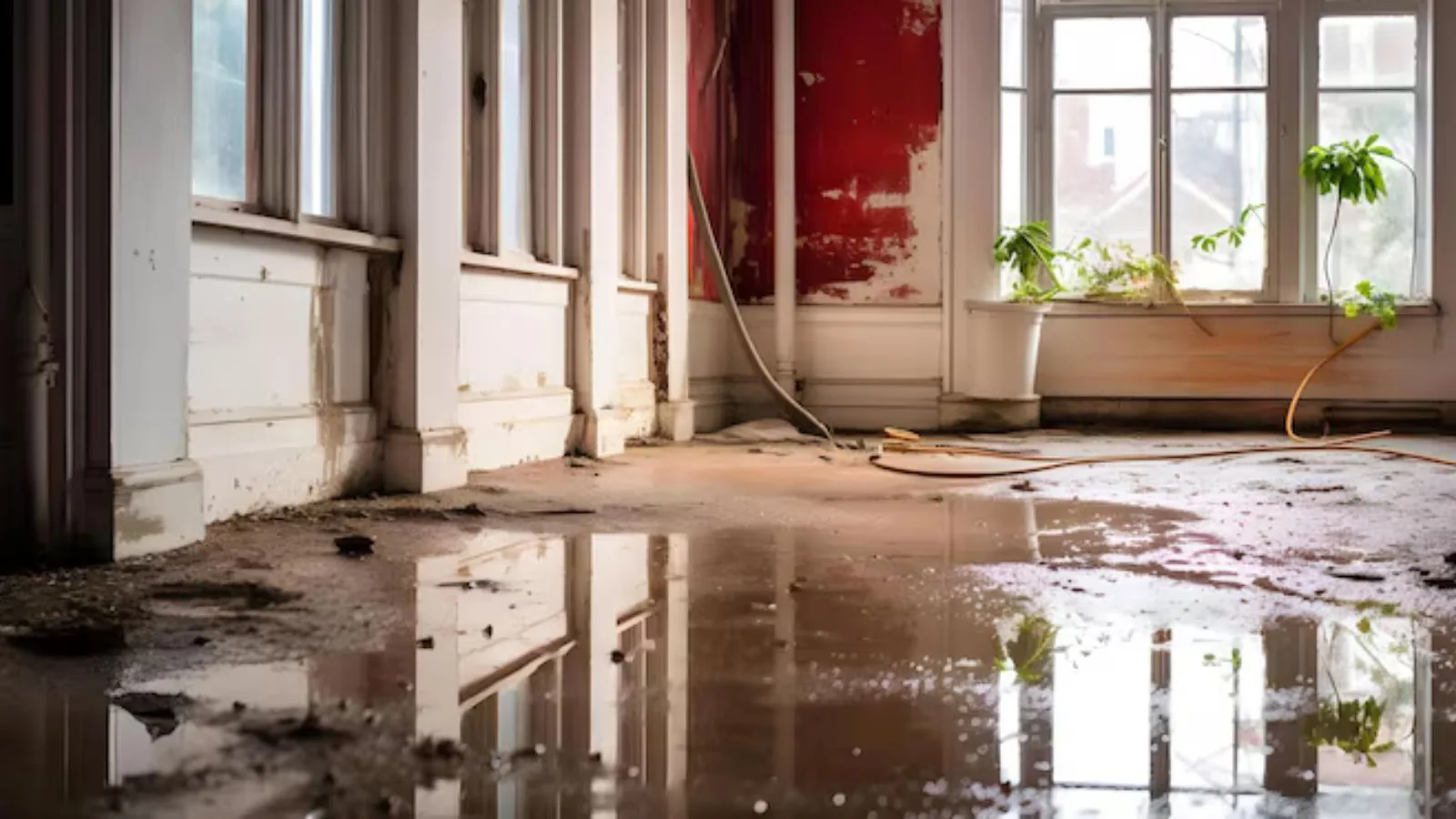
Flood damage is different from a plumbing leak because the water comes from outside and carries soil, bacteria and debris. In restoration terms, floodwater is treated as Category 2 or Category 3, which changes what can be saved. Jeffersonville sits on the Ohio River, so this page matters here more than in many places.
This page covers rising water, overland flow and groundwater entering a building. Wind and rain that enter through a roof or window belong on the storm water page, and a wet below-grade room has its own page on basement water damage.
Flood emergency: safety comes first
Stay out of moving water and never walk into water that may touch live wiring. If water has reached outlets, the panel or a gas appliance, leave the house and call the electric or gas utility and 911 if anyone is at risk.
- Do not turn on electrical equipment that has been wet.
- Wear boots, gloves and eye protection near floodwater.
- Do not drink or cook with tap water until the utility says it is safe after a boil advisory.
- Photograph the high water mark on walls before it is cleaned.
What floodwater does to a building
Floodwater soaks flooring, drywall, insulation and the lower part of framing. It leaves silt in corners and under cabinets. Porous materials that sat in contaminated water are usually removed rather than dried, because they cannot be cleaned reliably.
Crews extract water, remove ruined materials, clean and disinfect hard surfaces, and then dry the structure with air movers and dehumidifiers. Our sewage backup page explains the extra care used when the water is grossly contaminated.
Flood history and flood maps in Jeffersonville
Jeffersonville has lived with the Ohio River for its whole history. Indiana state history records heavy rain in the Louisville area from January 9 to January 23 in 1937, and by January 21 water covered every road leading into Jeffersonville.
Today the city participates in the National Flood Insurance Program and publishes floodplain information on its website. FEMA flood maps show which properties sit in a Special Flood Hazard Area, and the city Building Commissioner's office keeps copies of maps and elevation certificates. Check the FEMA map for your address rather than assuming either way.
Rebuilding rules after flood damage
The city states that if repairs or improvements from any cause cost more than 50 percent of a building's market value, excluding land, the whole building must meet current floodplain standards. That rule is called substantial damage or substantial improvement, and it can shape how a rebuild is planned in a floodplain.
Development in the 100-year floodplain may need a city permit, including fill and fences. The Building Commissioner's office handles permits, so ask before you start rebuilding.
What affects the cost
- Water category
- Floodwater is contaminated, so cleaning and removal are part of the job.
- Depth and duration
- Water that stood for days soaks deeper than water that drained quickly.
- Materials affected
- Flooring, drywall, insulation, cabinets and contents each have their own treatment.
- Square footage
- Larger affected areas need more equipment and more days of drying.
- Rebuild scope
- Floodplain rules can add permit steps and construction requirements.
We explain the scope and price in writing before work starts. Want your real number? Call (812) 642-7696 and describe what you see.
Insurance and your policy
The Indiana Department of Insurance says plainly that a homeowners policy will not cover flood loss. Flood coverage is a separate policy, often through the National Flood Insurance Program, and the Department notes that a flood policy normally does not take effect until 30 days after purchase.
Sewer or drain backup coverage is sometimes added to a homeowners policy as an endorsement, and it is often capped. Ask your agent which applies to you, and photograph everything before cleanup.
Frequently asked questions
Do you handle flood damage cleanup emergencies at night or on weekends in Jeffersonville?
Yes. Floods do not follow a schedule, and the dispatch line is answered 24/7. Call from a safe place and describe the water depth, and a same-day response is arranged when a crew is available.
Is flood damage covered by homeowners insurance?
In general, no. Flood needs separate flood coverage. Your agent can tell you whether you have it, and what a sewer backup endorsement covers.
Can flooded carpet be saved?
Carpet that sat in floodwater is normally removed because it is contaminated. The pad is almost always discarded.
How long until the house is dry?
Structural drying usually takes several days, and the crew checks moisture readings daily. Floodwater cleanup adds removal and disinfection before drying starts.
Do I need a permit to rebuild?
If your property is in the floodplain, a city permit may be required. Call the Building Commissioner's office at (812) 285-6412 before work begins.
Flood cleanup around Jeffersonville
We respond to flood calls across Jeffersonville, including areas along the riverfront, and in nearby towns such as Clarksville. After the water is out, structural drying finishes the job.