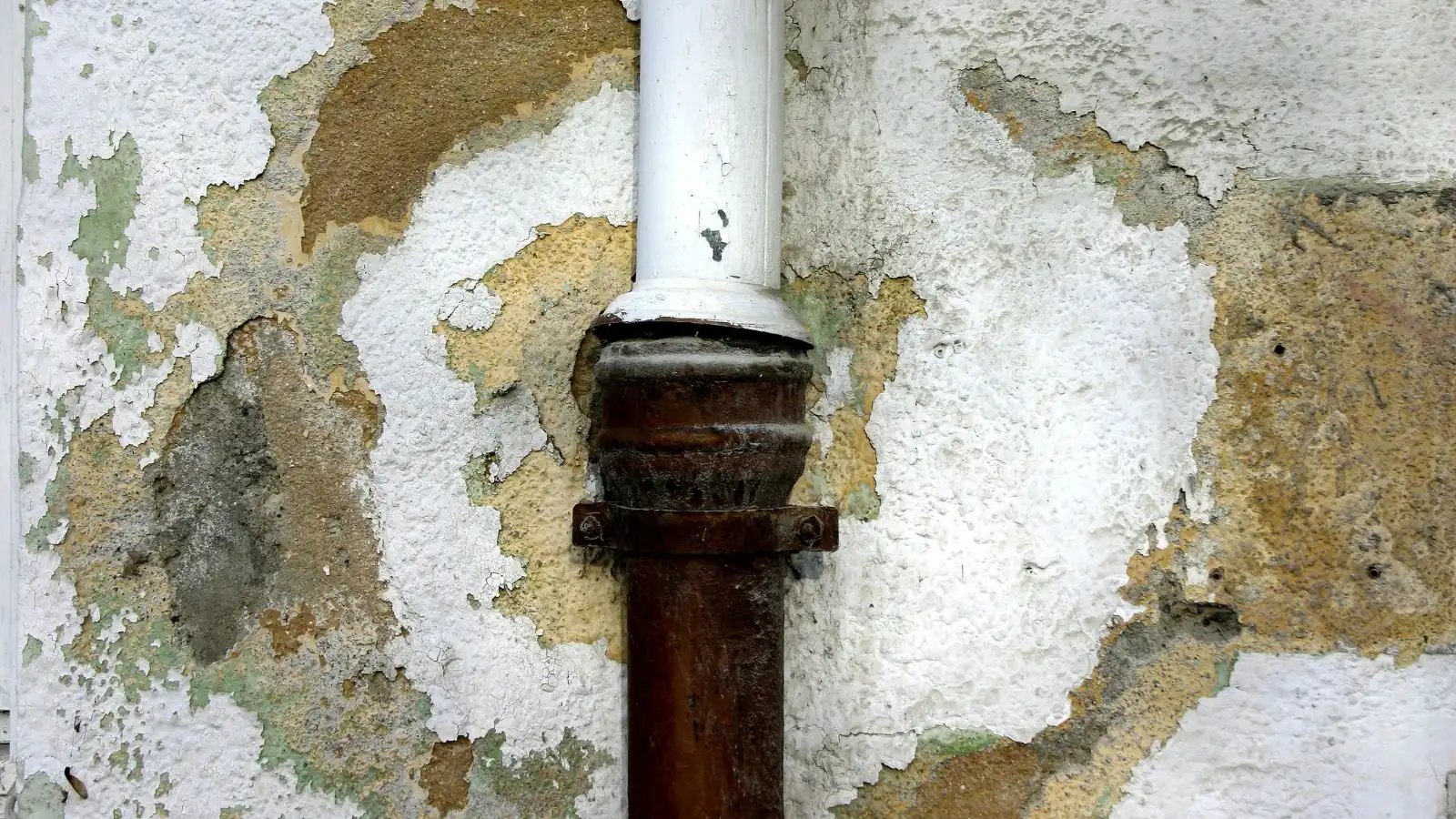
Drywall is paper-faced gypsum, and it does not like water. A wet wall bubbles, stains, softens at the bottom and can pull away from the studs. The paper face feeds mold if it stays damp, which is why a wall that has been wet should be checked even after the stain fades.
This page covers wall cavities, drywall, plaster and baseboards. Ceilings are on the ceiling page, and kitchen cabinets and the sink area are on kitchen water damage.
Signs that a wall is wet
- Bubbling or peeling paint.
- Brown or yellow stains that spread.
- Soft or crumbling drywall near the floor.
- A musty smell and swollen baseboards.
- Wall surfaces that feel cool or damp.
What to do right away
Stop the source and keep air moving across the wall. Remove baseboards if you can do it safely to let the cavity breathe.
Avoid painting over stains. Paint seals moisture in. Mark the edge of the stain with a pencil so you can see whether it grows.
Dry in place or cut it out?
Drywall that was wet briefly with clean water can often be dried with air movers and special drying panels. Drywall that sagged, crumbled or sat in contaminated water is cut out. Cuts are made above the water line, usually two feet up, and the insulation behind is checked.
A moisture meter in the studs and the bottom plate decides what stays. This is the same logic as the structural drying process.
Repairing plaster and drywall
After drying, new drywall is hung, taped and finished. Texture is matched, then the wall is primed and painted. Plaster, which many older Jeffersonville houses still have, is more work to patch because it needs a base coat and a finish coat.
The Old Jeffersonville Historic District is listed on the National Register of Historic Places, and homes inside it may have original plaster and trim. Ask the crew about repair methods that match your wall.
When mold is involved
If drywall has black or green growth, mold remediation comes before repair. A small spot on a hard surface is a homeowner job, while growth inside a wall needs a crew.
Protecting electrical and plumbing in the wall
Before cutting, we check for wiring and pipes in the cavity. Wet outlets and switches should be left off until an electrician confirms they are safe. If a pipe caused the leak, a plumber repairs it before the wall is closed.
Cutting, drying and closing walls
When drywall is wet only on the surface and the cavity is dry, drying in place can work. When insulation is soaked or the paper face has begun to separate, cutting out the wet portion is faster and safer. Cuts are usually made above the wet line, giving clean edges to patch.
- Measure the wet area with a meter.
- Remove wet drywall and insulation.
- Dry the studs and cavity with airflow and dehumidification.
- Verify readings before new drywall goes up.
- Hand off to a rebuild contractor or finish the repair.
We explain which steps are drying work and which are rebuild work.
Paint, texture and what comes after
New drywall needs taping, mudding, priming and painting. Matching texture on older walls can take skill, and the paint may need to be done across a whole wall for a clean look. Plan on rebuild work taking longer than drying.
If walls were wet for more than a few days, check for staining or odor. We can advise whether mold remediation is needed before closing the wall.
What affects the cost
- Wall area
- More wall means more cutting, taping and painting.
- Insulation
- Wet insulation is removed and replaced.
- Wall material
- Plaster is slower to repair than drywall.
- Drying time
- Cavities may need days of equipment.
- Finish work
- Texture, paint and trim are a separate part of the scope.
We explain the scope in writing before work starts. Want your real number? Call (812) 642-7696 and describe what you see.
Insurance and your policy
Sudden water damage to walls is commonly covered, and gradual damage from slow leaks is often not. Insurers often ask for evidence of when the leak began.
Photograph the wall before repairs, and keep the moisture readings we provide.
Frequently asked questions
Can I paint over water stains?
Not until the source is fixed and the wall is dry. Paint over a wet wall peels again.
How high does drywall get cut?
Usually above the wet line, commonly around two feet from the floor.
Will insulation need replacing?
Wet insulation is usually replaced.
How do I know the wall is dry?
A moisture meter reading in the studs and drywall.
Wall repair across Jeffersonville
We repair walls in Jeffersonville and nearby towns including Memphis. For leaks that start in the plumbing, see burst pipe damage.