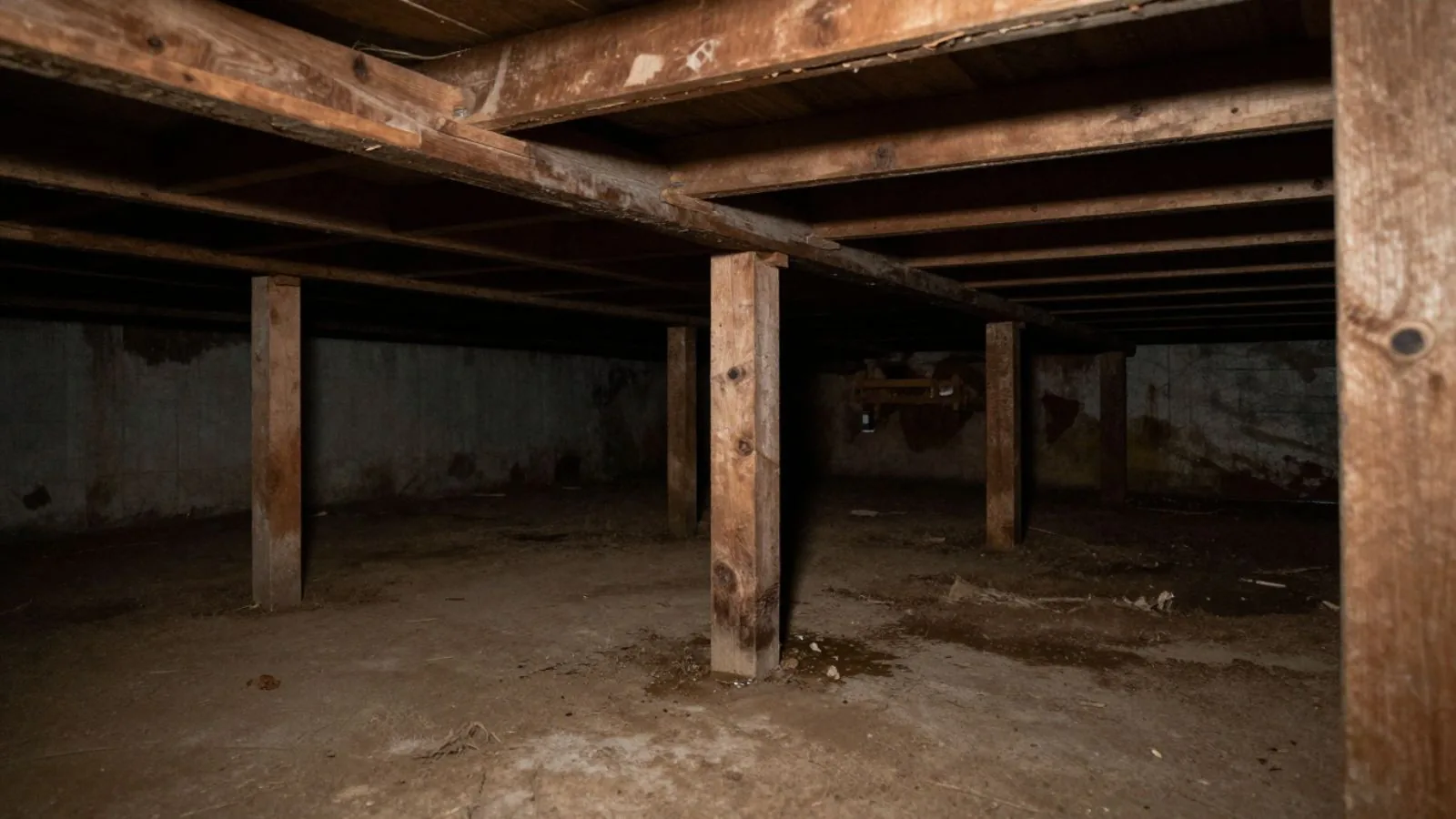
A crawl space is the void under a raised floor, and it is the easiest part of a house to ignore. Water gets in from groundwater, a plumbing leak, a failed vent or rain that runs toward the foundation. Wet joists and insulation can stay damp for months, and the floor above may feel cold or soft long before anyone looks.
This page covers crawl spaces only. A full basement has its own page on basement water damage, and a pipe leak that wets the crawl space is covered on the burst pipe page.
Signs your crawl space is wet
- A musty smell in the house, especially near floor vents.
- Cupped or soft flooring above the crawl space.
- Insulation that sags or lies on the ground.
- Standing water, wet soil or dripping pipes when you look inside.
- Condensation on ducts or pipes.
Always wear a respirator, gloves and eye protection if you enter a wet crawl space, and watch for wiring. If the water is deep or the space is tight, leave it to a professional.
How water gets in
Groundwater rises after long rain and pushes through foundation walls and floors. Downspouts that dump near the foundation, poor grading and clogged gutters send water toward the house. Plumbing leaks above feed the space as well.
We will not claim your specific lot is at risk. FEMA maps the Ohio River floodplain, the FEMA flood map for your address is the primary source, and the city Building Commissioner can help you read it.
Cleanup and drying
The crew removes standing water with pumps, removes wet insulation, and dries joists and subfloor with air movers and dehumidifiers. Vapor barriers that were damaged are repaired or replaced after drying.
The goal is to bring wood moisture back to a normal range. See structural drying for how readings are taken and when drying is finished.
Fixing the cause
Drying a crawl space without fixing the water source invites a repeat. Regrading, extending downspouts, sealing the vapor barrier and adding a sump pump are options that a drainage or foundation contractor can price. Restoration is not waterproofing, and we will tell you where our work ends.
If you see dark growth on joists, mold remediation comes before insulation goes back.
Preventing a repeat
Keep gutters clear and downspouts pointed away from the foundation. Check that the ground slopes away from the house, and look at the crawl space after heavy rain. A small amount of early attention costs far less than a flooded crawl space, and it protects the floors above.
If you smell damp air in the house, the crawl space is often the first place to look.
Working in a tight space
Crawl spaces are low, dark and often damp. Crews use lights, pumps and protective gear, and they check pipes, insulation and wiring while they work. We may photograph the space so you can see conditions you may never have viewed yourself.
If the cause is a plumbing leak, a plumber must repair it. If it is drainage, fixing grading or gutters may be the real answer. We tell you what we see and who to call.
Insulation, vapor barriers and airflow
Wet insulation loses its value and holds moisture against framing. It is usually removed. Plastic vapor barriers on the ground may need to be dried or replaced, and vents should be clear so the space can breathe.
After drying, we take readings and note any staining or growth. If growth is present, our mold remediation work covers the cleanup.
What affects the cost
- Water depth and source
- A plumbing leak is easier to stop than groundwater.
- Insulation and vapor barrier
- Wet insulation and torn barriers are replaced.
- Access
- Low clearance and narrow entry slow the work.
- Drying duration
- Wood holds water, so drying can run several days.
- Prevention work
- Drainage and waterproofing are separate from restoration.
We explain the scope in writing before work starts. Want your real number? Call (812) 642-7696 and describe what you see.
Insurance and your policy
Groundwater seepage and flood are commonly excluded from standard homeowners policies, while a sudden plumbing failure is often covered. The Indiana Department of Insurance notes that flood is a separate coverage.
Photograph the space before cleanup and keep the records.
Frequently asked questions
Can I clean a crawl space myself?
Light moisture, yes, with protective gear. Standing water, wet insulation and growth are better handled by a crew.
Is a damp crawl space always a problem?
Some humidity is normal. Standing water, dripping pipes and mold growth are not.
Will you waterproof the crawl space?
No. We dry and repair after water damage. A foundation or drainage contractor handles waterproofing.
How do I stop moisture coming back?
Fix grading and gutters, use a vapor barrier and ask a contractor whether a sump pump is appropriate.
Crawl space help across Jeffersonville
We serve Jeffersonville and nearby towns including Henryville and Memphis.