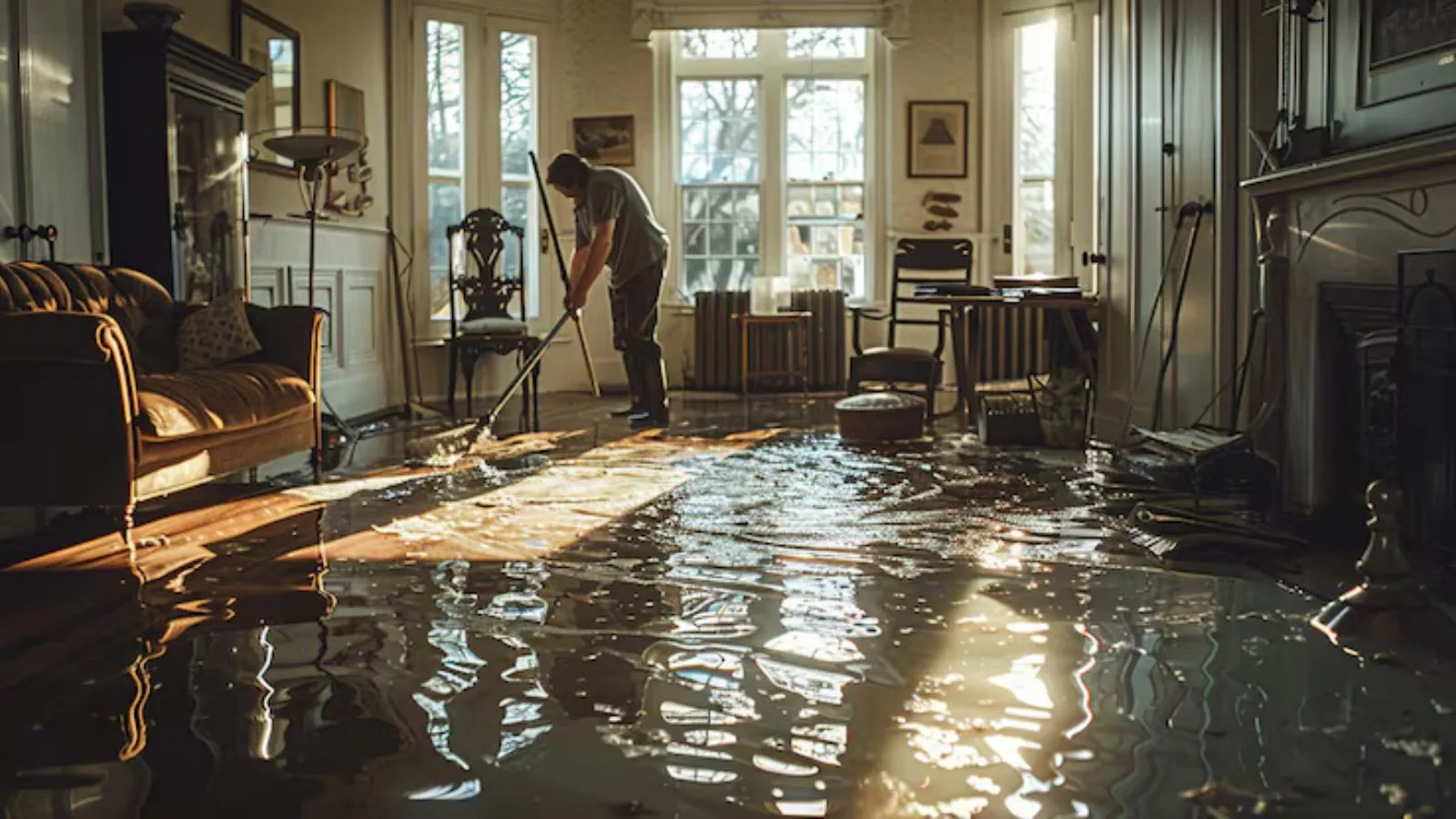
If you have standing water in a Jeffersonville home or business, you are in the first hour that matters most. Water extraction is the removal of liquid water from floors, carpet, pad and low cavities using pumps and extraction units, and it comes before any drying equipment goes in. Our dispatch line is open 24/7, so a call at 2 a.m. gets the same attention as one at noon.
This page covers water you can see and stand in. If the water came from one specific source, the pages on burst pipes and flood damage explain the source side. If the room is merely damp, structural drying is the better starting point.
When standing water is an emergency
Water that has sat for more than a day starts soaking into drywall, baseboards and the pad under carpet. Anything that is still pooled is an emergency, and so is any water that reaches an electrical panel, outlet or appliance plug.
Before you call, stop what you can safely stop. The list below takes about five minutes and keeps the loss smaller while a crew is on the way.
- Shut off the main water valve if a pipe or fixture is still running.
- Turn off power to the wet area only if you can reach the panel without standing in water. Otherwise stay out and call your electric utility.
- Lift rugs, electronics, paper and small furniture onto dry, raised surfaces.
- Keep children and pets out of the water, especially if it came from a drain or toilet.
- Take photos and a short video of the water line before anything is moved.
How extraction is done
Crews start with a moisture meter and a thermal camera to see how far the water went. Open water is pulled with submersible pumps and truck-mounted or portable extraction units. Carpet and pad are extracted in place when they can be saved, and cut out when they cannot.
Extraction is not drying. A floor that looks dry can still hold water in the subfloor, so air movers and LGR dehumidifiers follow, as described on the structural drying page. Skipping that step is how mold ends up behind baseboards a week later.
Water categories change the job
Category 1 water comes from a clean source such as a supply line. Category 2 water carries some contamination, like a dishwasher or washing machine overflow. Category 3 water is grossly contaminated and includes sewage and river flooding.
The category sets what can be dried and what must be removed. Porous materials that touched Category 3 water are normally discarded. The ANSI/IICRC S500 standard is the published guide for water damage work, and it is fair to ask any company whether its crews follow it. If sewage is involved, read the sewage backup page before you touch anything.
Jeffersonville conditions that affect water removal
Older parts of the city, including the Old Jeffersonville Historic District and Port Fulton, sit on a combined sewer system that dates to about 1900 and covers roughly 989 acres of the older downtown, according to the city. In a hard storm that system can be overwhelmed, so a floor drain in a low basement may be the first place water shows up. If your water arrived through a drain, treat it as contaminated and tell the dispatcher.
If the ground outside is saturated after a long rain or an Ohio River rise, pumping a basement too fast can pull water back in through the walls. Ask the crew how they pace extraction when the soil is wet.
What affects the cost
- Water category
- Clean water is the simplest. Contaminated water adds removal, cleaning and protective gear.
- Depth and square footage
- More standing water and more floor area means more equipment hours and more crew time.
- Materials soaked
- Carpet and pad, hardwood, drywall and insulation each respond differently once wet.
- Time since the loss
- Water left overnight reaches wall cavities. Early extraction usually shrinks the rest of the job.
- Access
- Basements, tight crawl spaces and stairs change how pumps and hoses are set up.
Extraction is usually the smaller part of a loss. Drying and repair follow, and the scope is explained in writing before work starts. Want your real number? Call (812) 642-7696 and describe what you see.
Insurance and your policy
Many homeowners policies respond to sudden and accidental water, such as a supply line that fails. They often do not respond to slow leaks or neglected maintenance, and flood damage is generally excluded unless you carry separate flood coverage. The Indiana Department of Insurance states that a homeowners policy will not cover flood loss.
Read your policy or ask your insurer before you decide anything. We take moisture readings and photos so you have a record to give your adjuster, and we never promise how a claim will turn out.
Frequently asked questions
Do you handle water extraction emergencies at night or on weekends in Jeffersonville?
Yes. The dispatch line is answered 24/7, including nights, weekends and holidays. Tell the dispatcher where the water is coming from and how deep it is, and a same-day response is arranged when a crew is available.
How long does water extraction take?
A typical room takes a few hours once the crew is on site. A full basement can take longer. The time depends on depth, access and how many extraction units are running, and the dispatcher can talk through your situation by phone.
Can I use a shop vacuum myself?
For a small spill, yes. For anything more than a puddle, a shop vacuum leaves most of the water in the pad and subfloor. Never use a household vacuum on standing water, and do not plug anything in while standing in a wet area.
Will the carpet be saved?
Carpet that touched clean water and is extracted quickly can often be saved. Carpet that sat in contaminated water is normally removed. The crew checks the water category before deciding.
Do you only work in Jeffersonville?
We dispatch across Jeffersonville and nearby towns, including Clarksville and Sellersburg.
Water extraction across Jeffersonville
Whether the water is in a Port Fulton basement, a house off Veterans Parkway or a shop near Spring Street, the first step is the same: stop the source, call, and get the water out before it reaches the framing. Our coverage includes ZIP codes 47130, 47131, 47132, 47133, 47134, 47144, 47190 and 47199.
If the water has already dried on the surface, see hardwood floor repair or carpet restoration for what comes next.