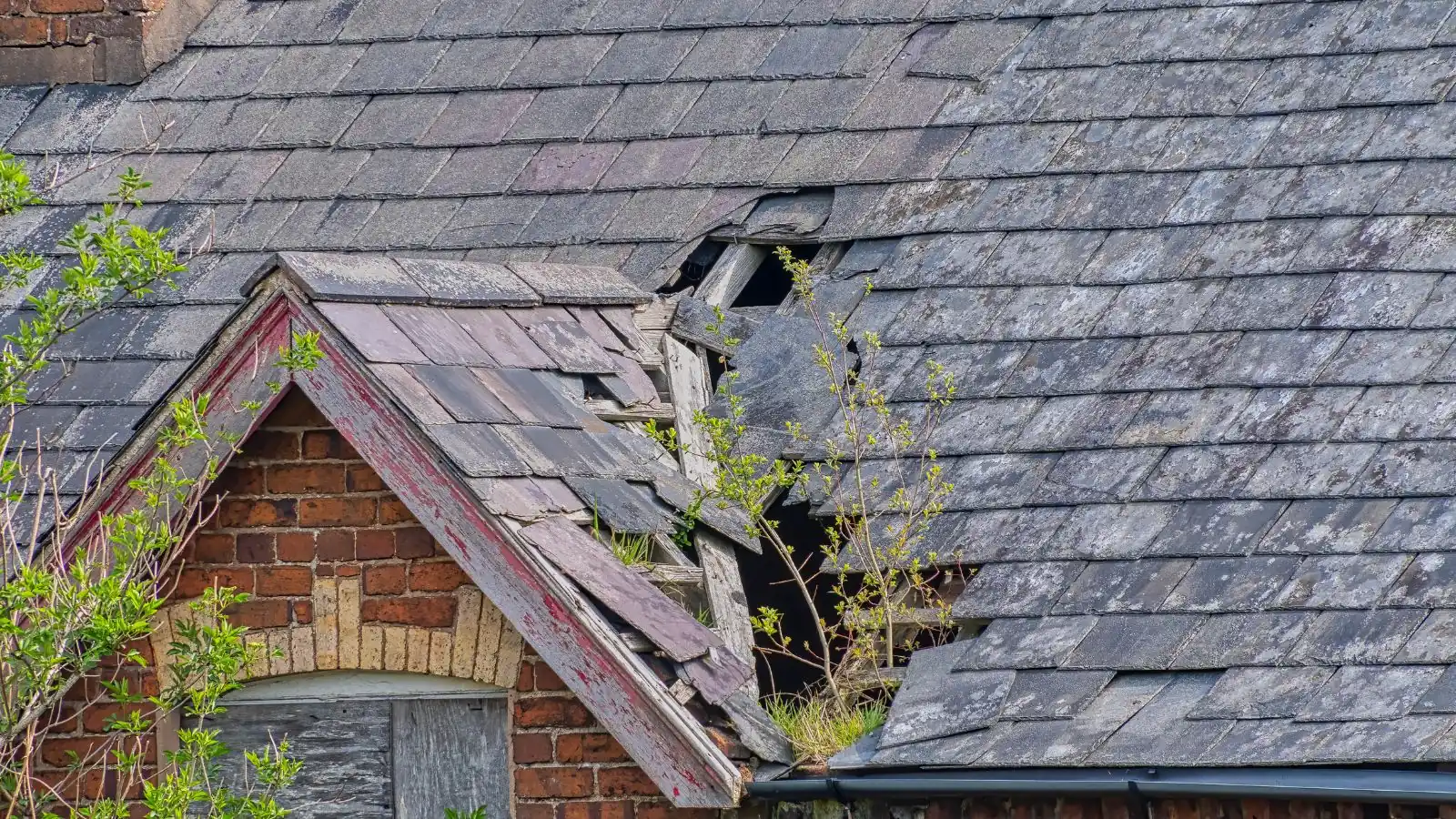
Storm water damage is the water that enters a building because wind, hail or driving rain broke through its outer shell. It is not rising floodwater, which is covered on the flood damage page, and it is not a plumbing failure. It is rain that came in through a hole.
Southern Indiana sees severe weather, and the March 2, 2012 Henryville tornado is a reminder. The National Weather Service rated it EF4 and traced about 17 miles of its path through Clark County. This page covers the interior water damage after storms of any size.
Storm damage emergency: protect the building
After a storm, make sure everyone is safe, then limit further water. Do not climb on a wet or damaged roof.
- Check for downed lines and gas odors and leave if you find any.
- Cover openings with a tarp or plywood from the inside if you can do it safely.
- Move belongings away from wet areas and place buckets under drips.
- Photograph roof, window and ceiling damage before temporary repairs.
- Call a roofer for the roof and our line for the interior water.
Where storm water goes
Rain enters through missing shingles, flashing, broken windows and failed seals. It soaks insulation, runs down walls and drips through ceilings. A small hole can put a lot of water in an attic in a short time.
Drywall that sagged and insulation that is soaked should be removed and the cavity dried, as the ceiling repair page describes. Walls with water inside follow the process on the wall and drywall page.
Cleanup and drying after a storm
The crew extracts water, removes wet insulation and drywall, and dries the structure with air movers and dehumidifiers. Moisture readings confirm progress. Because the water came from outside, it may carry dirt and debris, and some materials will be discarded.
A roofer secures the opening. Our work begins as soon as the building is safe to enter, and we coordinate with your roofer so that drying equipment is not running while the roof is open.
Storm season preparation in Jeffersonville
Clear gutters and downspouts, check shingles and flashing after any big storm and know where your main water and electric shut-offs are. Keep photos of your home as it is now, since before and after images help with a claim.
Jeffersonville homeowners near the river should also understand flood coverage, because wind coverage and flood coverage are different. The city participates in the National Flood Insurance Program and has information on its website.
Roof tarps and temporary protection
If a storm opens the roof or breaks a window, temporary covering stops more rain from coming in. A roofer or a general contractor usually installs it. We focus on removing the water already inside and drying the building, and we tell you what we see on the roof side so you can pass it on.
What affects the cost
- Size of the opening
- A few missing shingles differ from a missing section of roof.
- Time before the roof was covered
- More hours of rain means more wet material.
- Insulation and drywall
- Wet insulation is removed, and drywall may be cut back.
- Contents
- Furniture and flooring affected by water add scope.
- Roof repair
- Billed by the roofer, not as part of cleanup.
We explain the scope in writing before work starts. Want your real number? Call (812) 642-7696 and describe what you see.
Insurance and your policy
Wind and hail damage is often covered by homeowners policies, while flood damage is generally not. Many policies treat roof leaks after a storm differently from long-term leaks.
Ask your insurer how it wants temporary repairs documented and whether you need a contractor estimate before starting.
Frequently asked questions
Do you handle storm water damage emergencies at night or on weekends in Jeffersonville?
Yes. Storm damage is reported at night and on weekends, and the dispatch line is answered 24/7. Call when it is safe, and a same-day response is arranged when a crew is available.
Is storm damage the same as flood damage?
No. Storm damage is water entering through the roof or walls. Flood damage is rising water from outside. Coverage can differ.
Should I tarp the roof myself?
Only if it is safe. A roofer can do it more safely.
Will insurance cover storm damage?
Often wind and hail damage is covered, but policies differ. Ask your insurer.
How soon should drying start?
As soon as the structure is safe, ideally within a day or two of the storm.
Storm damage help across Jeffersonville
We respond to storm calls in Jeffersonville and nearby communities including Henryville, which sat on the 2012 tornado path.