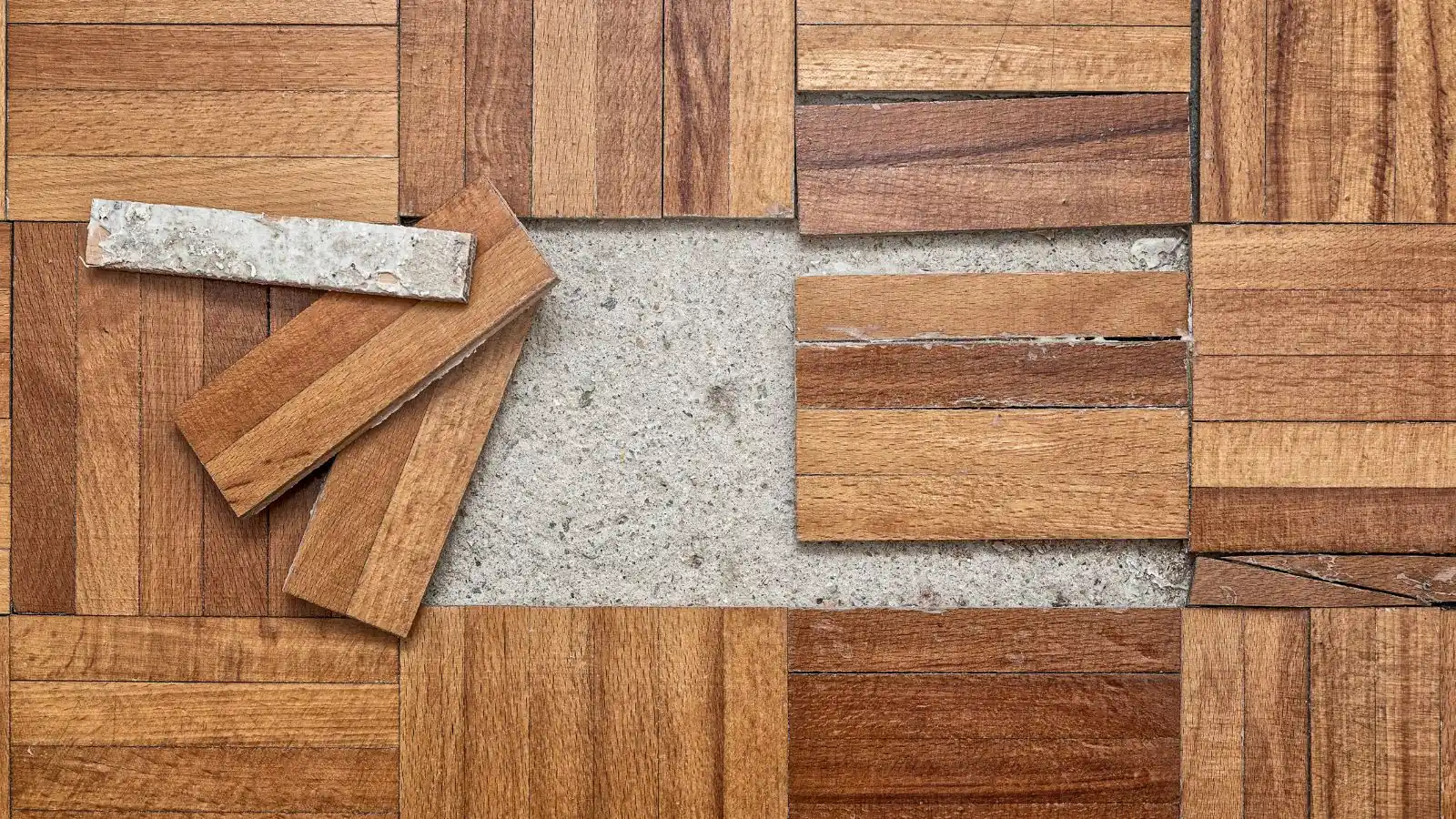
Wood is a natural sponge. When water gets under a hardwood, engineered or laminate floor, the boards absorb it, swell and push against each other. The usual signs are cupping, where board edges rise higher than the center, crowning, buckling and dark stains at the seams.
This page is about wood and laminate flooring. Wet carpet is on the carpet page, and water that sits on a concrete slab is described on slab leak damage. Taking early action decides whether the floor can be dried or must be replaced.
What to do right away
- Stop the water source and remove standing water.
- Lift rugs and furniture, and wipe the surface dry.
- Do not use heat guns or high heat to rush drying, because it can crack boards.
- Keep the room ventilated, and run a dehumidifier if you have one.
- Photograph the floor before any repairs.
Why wood floors cup and buckle
Water enters the board edges and the underside faster than the top, which is sealed by finish. The bottom swells more than the top, so the board curls up at the edges. If the water stays, the boards push against walls and lift off the subfloor, a condition called buckling.
Solid hardwood is more forgiving than engineered flooring and laminate, which are layered and can delaminate. Laminate with a fiberboard core usually cannot be saved after a significant soaking.
Drying wood floors: the careful way
Floor drying uses specialty equipment to pull moisture from boards and the subfloor below. Panels may be placed over the floor, or boards removed in small areas to open a path. Readings are taken with a moisture meter and compared to boards in a dry room.
Wood must dry slowly enough to avoid splitting. This is why our drying process is monitored daily and not rushed.
Sand, refinish or replace
- Light cupping that flattens after drying can often be sanded and refinished.
- Stained boards may be spot repaired.
- Buckled or delaminated flooring is replaced.
- Pre-1950s houses may have narrow strip floors that can be hand-matched.
- A subfloor that is soft needs repair before new flooring goes down.
Many older homes in the Old Jeffersonville Historic District have original hardwood. Matching old wood can be challenging, so ask about patching before replacing whole rooms.
Questions to ask before sanding
Ask for moisture readings in the boards and the subfloor, and ask how many days of stable readings are needed before sanding. A floor refinished too soon can shrink and gap later. A patient schedule saves a second repair.
If boards are damaged beyond saving, a flooring contractor can replace them and blend the finish.
Cupping, crowning and buckling
| Sign | What it means | What helps |
|---|---|---|
| Cupping | Edges higher than the center | Controlled drying, then reassess |
| Crowning | Center higher than the edges | Often follows sanding of a cupped floor |
| Buckling | Boards lift away from the subfloor | Prompt drying and possibly board removal |
| Staining | Dark marks in the wood | May need refinishing or replacement |
Some floors flatten as they dry, so do not sand too early. Waiting until readings stabilize avoids a second repair.
Why speed and patience both matter
Wood absorbs water and expands, so quick extraction helps. After that, patience matters, because rushing the drying can crack boards. We use controlled airflow and track readings so the floor comes down gradually.
Floors over crawl spaces and basements also need the space below dried, since moisture can come up from beneath.
What affects the cost
- Flooring type
- Solid hardwood often dries. Laminate and engineered products may not.
- Area affected
- Square footage drives drying and replacement.
- Time wet
- Floors that dried within days have better odds than floors wet for weeks.
- Subfloor
- A wet subfloor adds repair.
- Finish work
- Sanding, staining and sealing are separate from drying.
We explain the scope in writing before work starts. Want your real number? Call (812) 642-7696 and describe what you see.
Insurance and your policy
Many policies cover flooring damaged by sudden water, and may pay to repair the flooring to a similar quality. Gradual damage is often excluded. Policies differ on matching flooring between rooms.
Take photos before and after drying and keep samples of any removed boards.
Frequently asked questions
Can a cupped floor be saved?
Often yes when it is dried slowly and the cupping flattens. A floor that is buckled usually needs replacement.
Should I sand the floor right away?
No. Sand only after moisture readings show the boards are dry.
Can mold grow under hardwood?
Yes, if the subfloor stays wet. Dry quickly or see mold remediation.
How long does a wood floor take to dry?
Several days to a few weeks, depending on thickness and wetness. Readings decide.
Hardwood floor repair in Jeffersonville
We serve Jeffersonville and nearby towns including Sellersburg. If water came from an appliance, see appliance leak damage for what to do first.