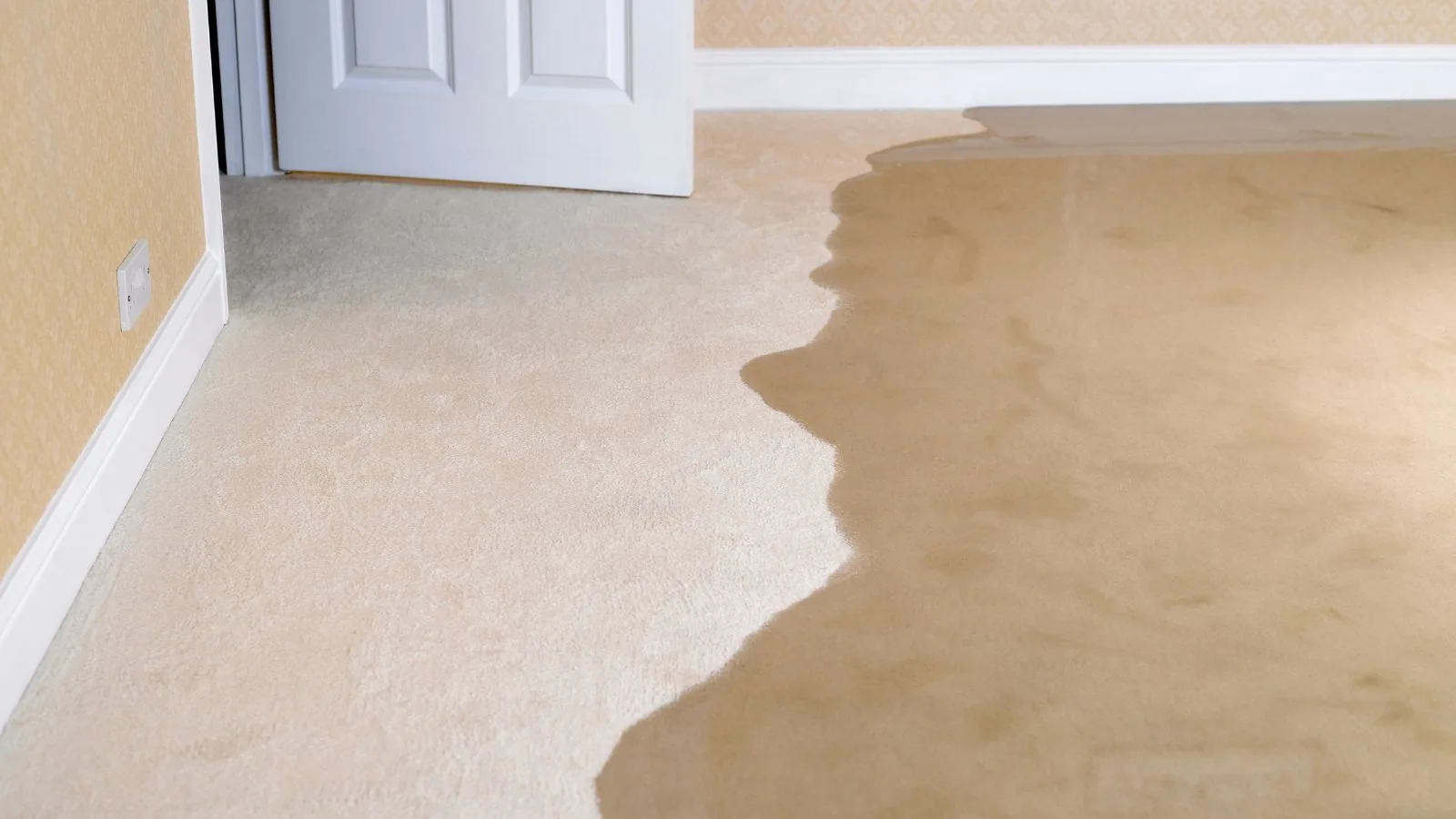
Carpet has three layers that matter in water damage: the surface fibers, the backing and the pad beneath. The pad absorbs most of the water and dries slowly, and the subfloor below it can stay wet long after the surface feels dry. A squishy step is the clearest sign that water is still trapped.
This page covers wall-to-wall carpet and area rugs. Wood and laminate are on the hardwood floor page, and a basement that floods carpet is on basement cleanup.
Carpet and the water category
Water type decides what can be saved. Carpet exposed to clean water, such as a supply line, can often be extracted and dried in place. Carpet that touched contaminated water from a sewer backup or floodwater is removed, because it cannot be cleaned reliably.
The pad is the weak point. It is cheap relative to the carpet and is commonly replaced even when the carpet is saved. The sewage page and flood page explain contaminated water.
What to do right away
- Stop the source of the water.
- Remove furniture and put foil or blocks under legs that must stay.
- Blot standing water, and use a wet vacuum if you have one.
- Do not use a household vacuum.
- Call for extraction and moisture readings.
How carpet is dried
Crews extract the carpet with a powerful extraction unit, then lift a corner to expose the pad and subfloor. Air movers dry the carpet and a dehumidifier pulls moisture from the air. The carpet may be floated, or lifted and supported on air, so air passes underneath.
If the pad is removed, the subfloor is dried directly. A moisture meter confirms the pad area and the tack strips are dry before everything is reinstalled.
Why delays lead to mold
Wet carpet and pad can grow mold within a couple of days if they stay damp. A musty smell after a leak means moisture is still trapped. If you see dark spots on the carpet backing or the subfloor, see mold remediation.
Newer homes tend to use synthetic carpet and foam pad that dry faster than old wool and jute, but any pad can hold water. Ask the crew to show you meter readings on the pad and the subfloor.
Carpet, pad and the subfloor beneath
Carpet is three layers: the face fiber, the backing and the pad. The face dries quickly, while the pad holds water like a sponge. In most clean-water losses that are caught early, the carpet can be lifted, the pad removed and the floor dried before the carpet goes back down.
Carpet that sat in dirty water, or that stayed wet for several days, is usually removed. We explain which category your loss falls into before we remove anything, and we photograph the carpet for your insurer first.
| Condition | Typical approach | Why |
|---|---|---|
| Clean water, caught within a day | Extract, lift, dry, reinstall | Fiber and backing can often be saved |
| Clean water, wet for days | Remove pad, evaluate carpet | Mold risk rises with time |
| Dirty water | Remove carpet and pad | Contamination is not safely cleaned from porous material |
| Wet over a concrete slab | Dry the slab, test readings | Concrete holds moisture under flooring |
Never walk on soaked carpet more than you must, because it can stretch the backing and push water into the subfloor.
What to expect during drying
Expect air movers on the floor and a dehumidifier running in the room for several days. The noise is part of the drying process. A technician checks readings and moves equipment so that all areas get airflow.
What affects the cost
- Water category
- Clean water makes saving carpet possible.
- Time wet
- Hours matter. Days reduce the odds.
- Carpet quality and age
- Older carpet may not survive stretching and drying.
- Square footage
- Larger areas need more equipment.
- Pad and subfloor
- Pad replacement is common even when carpet is saved.
We explain the scope in writing before work starts. Want your real number? Call (812) 642-7696 and describe what you see.
Insurance and your policy
Many policies cover carpet damaged by sudden water, subject to deductibles, while flood and sewer backup are treated separately. Depreciation can affect payouts on older carpet.
Keep samples and photos. Ask your adjuster about pad replacement.
Frequently asked questions
Can wet carpet be dried in place?
Yes, if the water is clean and extraction starts quickly. The pad is often replaced.
How long should I leave equipment running?
Typically a few days. Readings decide.
Is wet carpet dangerous?
Carpet wet with clean water is a nuisance. Carpet wet with sewage or floodwater is a health risk.
What if it smells musty?
That suggests moisture remains. A moisture meter can find it.
Carpet restoration in Jeffersonville
We serve Jeffersonville and nearby towns including Clarksville. The overall drying approach is described on the structural drying page.