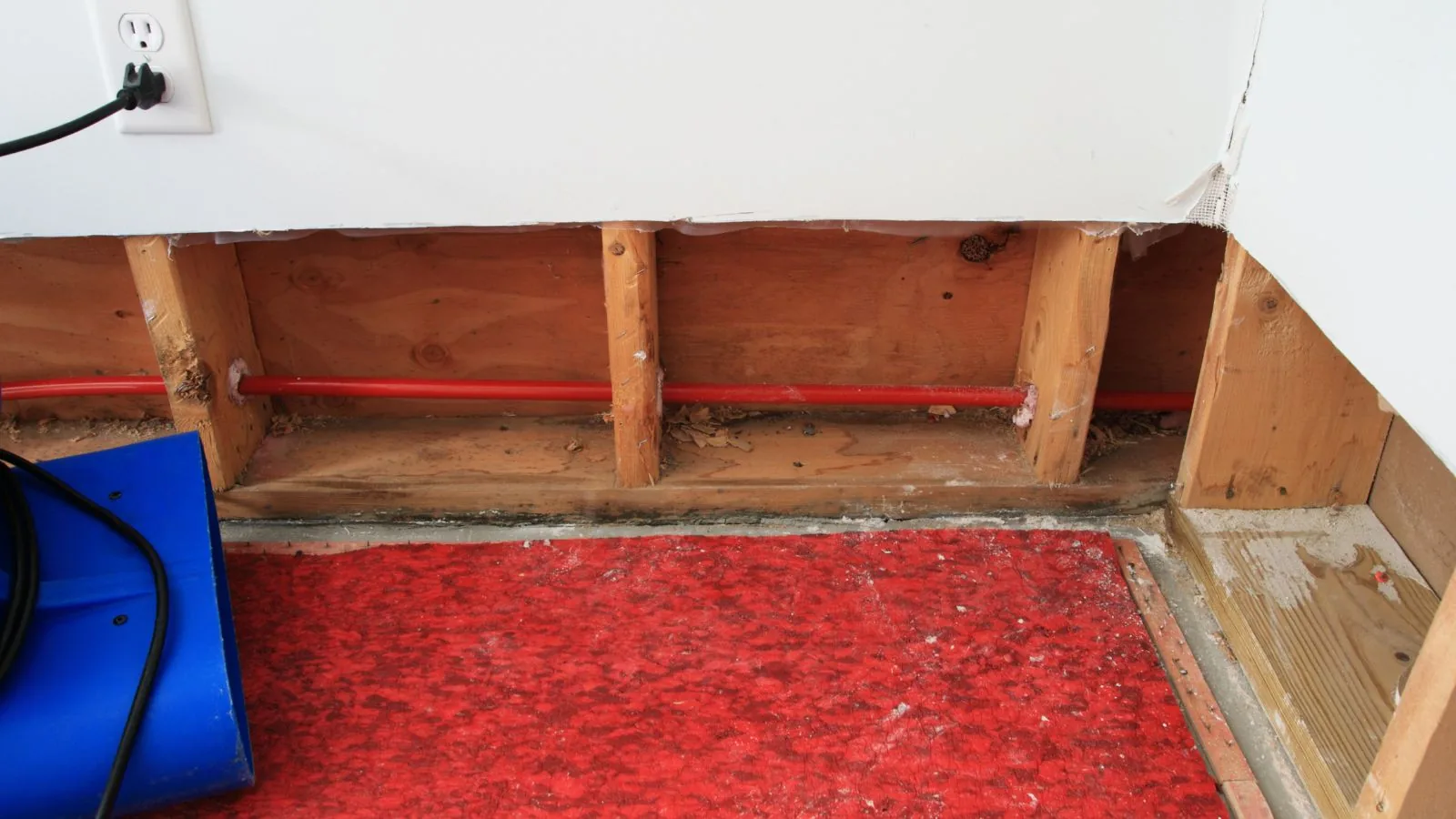
Structural drying is the controlled removal of moisture from building materials after water damage. It uses air movers to push air across wet surfaces and dehumidifiers to pull the moisture out of the air, with moisture readings taken every day to confirm progress. Water mitigation is the broader term for the whole emergency response, and drying is its longest stage.
This page explains the process and equipment. Removing standing water comes first and is described on the water extraction page. If drying was skipped on a past leak and you now see growth, see mold remediation.
My floor looks dry but the wall is still damp. What now?
People describe this as a musty smell after cleanup, baseboards that look fine but feel cool, or paint that bubbles weeks later. Those are signs that moisture remains in the materials. The trade name for the fix is structural drying and dehumidification, and it uses moisture meters, thermal imaging and monitored equipment to find and remove water that you cannot see.
The drying process step by step
- Moisture mapping with a meter and a thermal camera to find every wet area.
- Removal of materials that cannot be dried, such as saturated insulation or soaked carpet pad.
- Placement of air movers and an LGR dehumidifier sized to the space.
- Daily moisture readings and equipment adjustments.
- A final reading showing materials are back to a normal range before equipment is removed.
The room is closed so that dehumidifiers work on the wet space and not the whole house. Doors and windows stay shut during drying.
Equipment in plain words
Air movers are high velocity fans placed low to the floor and along walls. LGR dehumidifiers, which stands for low grain refrigerant, remove water vapor from the air. Moisture meters read water content in wood and drywall, and thermal cameras show cool, wet spots behind surfaces.
More equipment is not always better. The goal is to dry the materials without drying out wood so fast that it cracks, which matters for hardwood floors.
Water mitigation: the 24 to 72 hour window
The first one to three days matter because wet drywall, carpet and framing begin to grow mold if they stay wet. Mitigation means stopping the source, extracting water, removing damaged materials and starting drying within that window.
The published ANSI/IICRC S500 standard guides how drying goals are set. Ask any contractor how it documents readings.
Drying in Jeffersonville homes
Humid Ohio Valley summers can slow drying because the air already holds a lot of moisture, which is why a dehumidifier does more than fans alone. In winter, heating the space helps. Older houses in the Old Jeffersonville Historic District often have plaster walls, which hold water longer than drywall.
Drying equipment uses electricity continuously, so the crew plans circuits so that breakers do not trip. Do not move or switch off the equipment unless the crew tells you to.
Drying goals and daily checks
The goal of drying is to bring wet materials back to normal moisture levels, based on readings from unaffected areas of the same building. Technicians return each day, record readings and adjust equipment. When the numbers match, the equipment comes out.
What affects the cost
- Area and volume
- Larger and wetter spaces need more air movers and more dehumidifiers.
- Materials
- Plaster, hardwood and dense framing dry slower than drywall.
- Drying days
- Each day of monitored equipment adds to the scope.
- Initial water category
- Contaminated water adds removal before drying.
- Monitoring
- Daily readings are part of the work, not an extra.
We explain the scope in writing before work starts. Want your real number? Call (812) 642-7696 and describe what you see.
Insurance and your policy
Drying is generally part of a covered water loss when the cause is covered. Insurers often want documentation of moisture readings and equipment logs, which we keep.
Ask your insurer how long it expects drying to take, and send readings if there is a question.
Frequently asked questions
How long does drying take?
Commonly three to five days for a small area, longer for dense materials or large losses. Daily readings decide.
Can I run a household dehumidifier instead?
It helps with damp air but cannot dry soaked materials. Structural drying uses a combination of equipment.
Is the equipment loud?
Air movers and dehumidifiers make noticeable noise. Crews place them to dry efficiently, not quietly.
What is moisture mapping?
A way of marking wet areas with a meter and thermal camera before and during drying.
Structural drying near you
We bring drying equipment to Jeffersonville and nearby towns including Sellersburg.