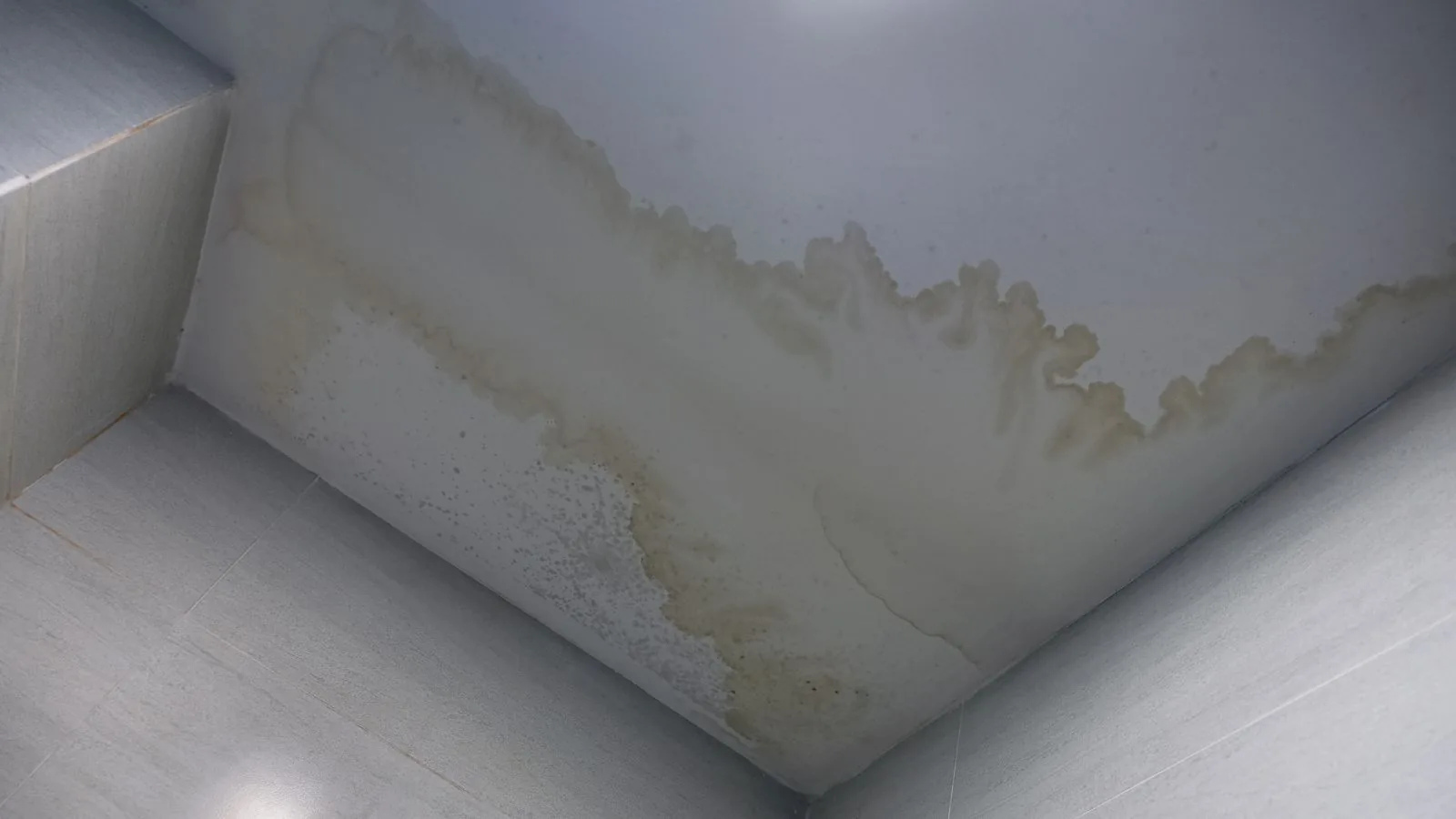
A stain on the ceiling is the part of the problem you can see. Above it, insulation, joists and the back of the drywall may be soaked, and a bulging ceiling can hold gallons of water. Whether the source is the roof, a bathroom upstairs or an air handler in the attic, the first job is the same: find the water and relieve it safely.
This page covers finished ceilings and the roof leaks that feed them. If the water came from a supply line, compare burst pipe damage. If the wall below is also stained, see wall and drywall repair.
Ceiling emergency: when to call right now
A ceiling that bulges, drips or has sagged is an emergency. Drywall can fail without warning when it is full of water, and falling material is a risk to anyone standing under it.
- Move people, pets and furniture away from the sagging area.
- Place a bucket under active drips and move valuables out of the room.
- If light fixtures are wet, turn off the breaker for that circuit only if the panel is dry and safe to reach.
- If it is safe, poke one small hole at the lowest point of a bulge to let water drain into a bucket.
- Photograph the stain, the bulge and any visible roof damage.
Finding the source of the water
A ceiling stain can sit several feet from its source, because water runs along rafters and pipes before it drips through. Common sources include worn shingles, flashing around chimneys and vents, an upstairs bath, a leaking supply line and condensate from an attic air handler.
The crew traces moisture with a meter and thermal camera. Plumbing sources are referred to a plumber, and roof sources to a roofer. The water damage itself, including wet insulation and drywall, is our part of the job.
Roof leak water damage
Roof leaks have no separate page on this site because the damage happens in the ceiling and attic. When water comes through a roof, it soaks the decking, the insulation and then the drywall. A tarp is a temporary fix, and a permanent roof repair is done by a roofer.
If a storm caused the opening, our storm water damage page covers wind and rain damage more broadly. We handle the interior cleanup, drying and drywall repair once the roof is secure.
How ceiling repair works
Wet insulation is removed and the drywall is cut back to dry material. The cavity is dried with air movers and a dehumidifier, and moisture readings confirm that it is ready to close. Then new drywall is hung, finished, primed and painted.
Painting over a stain without drying the cavity traps moisture and invites mold. If you already see dark spots, mold remediation comes before repair.
What affects the cost
- Source of the leak
- Roof sources and plumbing sources are repaired by other trades, so the cost is separate.
- Ceiling area
- A single stain is a smaller scope than a ceiling that sagged across a room.
- Insulation
- Wet insulation is usually replaced, and attic access affects the work.
- Drying time
- A closed cavity may need equipment for several days.
- Finish work
- Texture matching, priming and painting are a separate part of the scope.
The scope and price are explained before any drywall is cut. Want your real number? Call (812) 642-7696 and describe what you see.
Insurance and your policy
A sudden roof or plumbing failure is often covered when it is sudden and accidental, but wear, neglect and slow leaks are often excluded. A roof that was already failing may be treated differently from one hit by a storm.
Take photos of the ceiling and the roof before repairs. Ask your insurer which repairs it expects you to complete first.
Frequently asked questions
Do you handle ceiling water damage repair emergencies at night or on weekends in Jeffersonville?
Yes. A leaking ceiling is a nighttime and weekend problem, and the dispatch line is answered 24/7. Call and describe the bulge or the stain, and a same-day response is arranged when a crew is available.
Can I just paint over the ceiling stain?
Painting over a stain without drying and finding the source usually brings it back. The cavity has to be dry and the leak fixed before finishing.
Is a sagging ceiling dangerous?
Yes. A ceiling full of water can collapse. Keep people away, relieve water into a bucket if it is safe, and call.
Who fixes the roof?
A roofer. We dry the structure and repair the interior damage.
Does the whole ceiling have to be replaced?
Not always. Damaged drywall is cut back to dry material and patched when the area is small. Large sagging areas are often replaced.
Ceiling repair across Jeffersonville
We repair ceilings in Jeffersonville homes of every age, including the older housing in the Old Jeffersonville Historic District, where plaster and layered ceilings need extra care, and in nearby towns such as Memphis. For the drying phase, see structural drying.