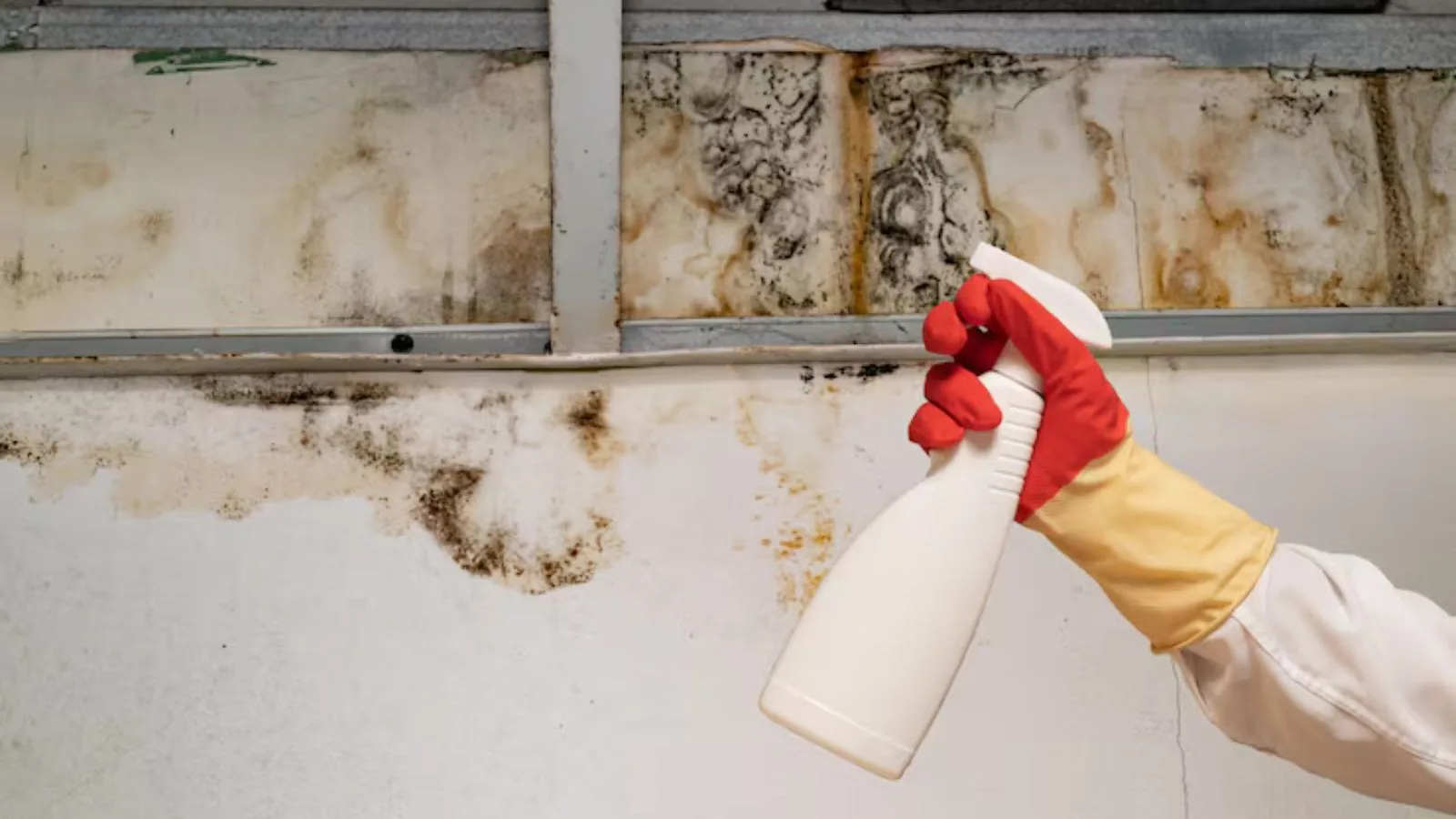
Mold is a fungus that grows on damp surfaces, and the cure is to remove the moisture and the growth. It is common after a leak, a flood or a humid summer in a house with poor airflow. Remediation means containing the area, removing the growth and the materials it has taken hold in, and fixing the moisture that caused it.
This page explains the process. We do not make health claims, and questions about symptoms belong with a physician. If water is still present, start with structural drying.
I see black spots and smell something musty. What is it?
People describe it as dark spots on a wall, a musty smell in a basement or fuzzy growth on a ceiling. That may be mold, but only a test or a visual inspection by a qualified person can say. The trade term is mold remediation, which covers containment, removal and cleaning, and it follows the ANSI/IICRC S520 standard.
How mold remediation works
- Fix the moisture source. Mold returns if the water does.
- Contain the area with plastic sheeting and negative air so spores do not spread.
- Remove materials with growth that cannot be cleaned, such as drywall and carpet.
- Clean and treat salvageable surfaces with HEPA vacuums and damp wiping.
- Dry the area and verify moisture is normal.
ANSI/IICRC S520 is the published standard for mold remediation. It is reasonable to ask any company whether its crews work to it.
Testing and clearance
Testing can confirm what a growth is and whether an area is clean afterward. It should be done by an independent party to avoid conflict. A clearance report is a written result showing the area passed after cleanup.
Ask whether your state licenses mold work. We do not state licensing rules here, because they are set by the state agency.
What homeowners can and cannot do
A small spot on a hard surface can often be cleaned by a homeowner with basic care. Larger areas, growth inside walls or growth after water damage are better left to a crew. Surface cleaning and removal are different jobs.
Do not run a fan over moldy areas and do not paint over mold. Both spread or hide the problem.
Keeping mold from coming back
Keep indoor humidity in a moderate range, fix leaks promptly and vent bathrooms and kitchens. Basements, crawl spaces and attics are common trouble spots. The crawl space page and basement page explain moisture sources.
Southern Indiana summers are humid, which means damp rooms stay damp. Running a dehumidifier in a basement is a common step, and the readings from structural drying show when a space is truly dry.
Protecting the rest of the house
During cleanup, the work area is sealed, and the air inside is filtered. Keep family members and pets away from the area, and ask about the schedule for removal, cleaning and drying. If anyone in the home has health concerns, talk with a doctor about whether they should stay elsewhere.
Verification after cleanup
After removal and cleaning, the area is checked for dryness and visible growth. Some owners hire an independent assessor for testing, and we leave that to a third party so the result stands apart from the work. We provide moisture readings and photos.
If the moisture source has not been fixed, growth returns. We tell you what we see and who should fix it, whether a plumber, roofer or drainage contractor.
What affects the cost
- Area affected
- A small patch is a smaller job than growth through several rooms.
- Material removal
- Drywall, carpet and insulation with growth are removed.
- Containment
- Plastic barriers and air filtration add labor.
- Testing
- Independent testing before and after is billed by the tester.
- Moisture fix
- Repairing leaks and drainage is separate.
We explain the scope in writing before work starts. Want your real number? Call (812) 642-7696 and describe what you see.
Insurance and your policy
Mold coverage varies widely. Some policies cover mold that results from a covered water loss, often with a limit, and exclude mold from long-term moisture.
Ask your insurer before work begins.
Frequently asked questions
Is all mold dangerous?
We do not give health advice. If you are concerned about symptoms, talk to a physician.
Can bleach kill mold?
Bleach is not a reliable fix on porous materials. Removing the growth and the moisture is the standard approach.
Do I need testing?
Not always. A visual inspection and moisture readings are often enough, and testing can help after remediation.
How long does remediation take?
From a day for a small area to longer for large ones, plus drying time.
Mold remediation near you
We serve Jeffersonville and nearby towns including Clarksville and Sellersburg. Our ZIP codes include 47130, 47131, 47132, 47133, 47134, 47144, 47190 and 47199.